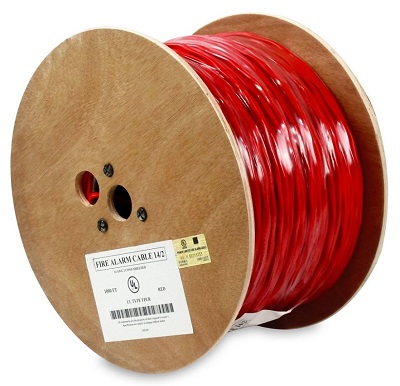
fire alarm cable
fire alarm cable is available at www.affrosonicsystems.com are specially designed cables used to install fire alarm systems, ensuring reliable operation during emergencies. They come in various types, including flame retardant and fire resistant, with the latter designed to maintain circuit integrity even in fire conditions.
n
-
n
- 100 meters roll
- 1.5mm
n
n
SKU: firecable1.5mm
Nationwide
Delivery
Cash / M-Pesa
on Delivery
1 Year
Warranty
Expert Support
Mon-Sat
fire alarm cable maintains circuit integrity and continues to work under fire for a stated period. With features of flame retardant property, low smoke and low gas emissions, it ensures maximum fire safety and fire evacuation capability. All at www.affrosonicsystems.com
n
fire alarm cable Key Characteristics and Types:
n
n
n
-
n
-
n
nnnFlame Retardant:
n
n
nThese cables are designed to retard the spread of flames along the cable route, preventing fire from quickly traveling through the building via the cabling.
nnnnn
n
n
n
n
n
n
-
n
nnnFire Resistant (FR):
n
n
nFR cables are designed to maintain circuit integrity for a significant period during a fire, allowing emergency systems like alarms, voice communication, and smoke detectors to continue functioning.
nnnnn
n
n
n
n
n
n
-
n
nnnConductor Material:
n
n
nFire alarm cables typically use copper conductors, often tin annealed for increased strength and heat resistance.
nnnnn
n
n
n
n
n
n
-
n
nnnInsulation:
n
n
nInsulation materials like PVC/Nylon or special fire-resistant silicon are used to protect the conductors and prevent short circuits during a fire.
nnnnn
n
n
n
n
n
n
-
n
nnnShielding:
n
n
nSome fire alarm cables may include an aluminum foil shield with a drain wire for protection against electromagnetic interference.
nnnnn
n
n
n
n
n
n
-
n
nnnColor Coding:
n
n
nWhile red is a common color for fire alarm cables due to easy identification, other colors can be used as long as they are unique within the building’s electrical system.
nnnnn
n
n
n
n
n
n
-
n
nnnStandards:
n
n
nFire alarm cables must meet specific standards, such as those outlined in BS 5839-1 (for fire detection and alarm systems) and BS 7629-1.
nnnnn
n
n
n
n
n
n
n
n
n
n
n
n
n
n
n
n
Applications:
n
n
n
-
n
- Fire Detection: Smoke detectors, heat detectors, and other fire detection devices.
nnnnn
n
n
- Voice Communication: Public address systems and voice evacuation systems.
nnnnn
n
n
- Burglar Alarms: Security systems that may be integrated with fire alarm systems.
nnnnn
n
n
- Emergency Lighting: Critical circuits for emergency lighting systems.
nnnnn
n
n
- Elevator Capture and Shutdown: Systems that control elevators in emergency situations.
nnnnn
n
n
- Damper Control and Door Release: Fire safety systems that control dampers and door release mechanisms.
nnnnn
n
n
- Power-limited and Non-power limited: Fire alarm cables are available for both power-limited and non-power-limited circuits, with the latter typically used in older installations.
nnnnn
n
n
n
n
n
n
n
n
n
n
n
n
Importance of Proper Installation:
n
n
n
-
n
-
n
nnnProfessional Installation:
n
n
nDue to the critical nature of fire alarm systems, it is crucial that cables are installed correctly by qualified professionals.
nnnnn
n
n
n
n
n
n
-
n
nnnAdherence to Standards:
n
n
nFollowing relevant standards, like those from BS 5839-1 and NEC Articles 760 and 725, is essential for safety and proper system functionality.
nnnnn
n
n
n
n
n
n
-
n
nnnSegregation:
n
Fire alarm cables should be segregated from other electrical services to prevent interference or damage.n
n
n
n
n
n
n
n
Related Products